Insight Marketing Blog
Your Marketing Toolbox: Advertising
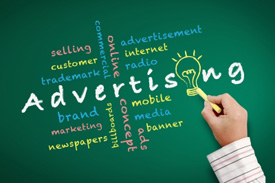
Advertising – an important component of
your marketing toolbox.
We’ve talked about the importance of integrated marketing – tying all of your tactics together under one unified strategy. But how do you know you’ve chosen the right tactics in the first place?
Different marketing tools come with different strengths and weaknesses, and different price tags, too. You have to strike the right balance between staying on budget and choosing the best tools to reach your objectives. So in this blog series we’ll break down the most common marketing tactics and discuss how, where and why (or why not) to use them. First up: Advertising.
We’re all familiar with advertising. It’s everywhere – television, radio, newspapers and magazines, outdoors and even inside public restrooms. (We’ll cover online advertising later.) It makes us laugh, think, sometimes groan and – most importantly – crack open our wallets.
Advertising can generate leads and direct sales (Act Now!), though it’s just as often used to build brand awareness or rejigger a company’s image. There are few better ways to announce a new product or service. Yet big corporations like Coke may spend millions every year even when they have nothing new to sell.

No company has been as successful as Coco-Cola in building positive brand awareness through advertising.
Research suggests businesses are spending less on traditional advertising and reallocating budgets to online marketing. But that also means you’ll find less competition in traditional media outlets. And when it’s done right, people pay attention.
That’s why advertising still holds an important position in many marketing plans. Next we’ll look at some pros and cons to help you decide if it’s right for your next campaign.
Pros of Advertising
With advertising, you have complete control of the message. You decide when and where it will appear, unlike PR efforts which are subject to the whims of editors and publishers.
Traditional advertising can also reach more people in more places than newer forms of marketing because it doesn’t require active participation, like social media or websites in which your customers must actively engage and interact with your sales message. Print advertising is a particularly good way to target niche markets.
And there’s no doubting the power of a truly creative advertising campaign. Remember Old Spice? The company revived its outdated brand with a series of clever commercials featuring “The Man Your Man Could Smell Like.”
Cons of Advertising
Here’s the bad news: advertising will cost you. It’s expensive relative to most other forms of marketing. Media outlets can be somewhat capricious when it comes to setting ad rates, though most will cut deals below the listed rate.
No matter where it appears, advertising also requires plenty of repetition. An old advertising rule of thumb says that viewers must read or see your ad seven times before it makes an impression. One or two ads, no matter how well targeted, won’t make an impact in a cluttered marketplace.
Lastly, unless your ad is designed to generate leads and direct sales, it can be difficult to measure your return on investment. As retail tycoon John Wanamaker once quipped: “Half the money I spend on advertising is wasted. The trouble is I don’t know which half.”
Tips to Get More from Your Advertising
If you decide to advertise (or more likely when), here are a few tips to help you get the most from this tactic:
- Choose media outlets carefully. Does the outlet appeal to your target demographic? How many people will it reach? Is it aligned with your brand, goals and strategy? All things considered, is it the most cost-effective option?
- Negotiate ad rates. Factors like competing outlets, ad placement, the size of your business, the time an ad runs and how often it runs can all be used to leverage lower rates. Don’t be afraid to haggle.
- Make it creative. Effective advertising relies on creativity more than the other tactics we’ll discuss. If it doesn’t make a dent in the consumer’s consciousness, great ad placement won’t mean much.
- Include a response mechanism. You may want to ask your audience to take some action that helps you gauge the ad’s effectiveness. For example, calling a particular toll-free phone number, visiting a specific web page for more information, or entering a unique code – anything you can use to track responses.
How have you used advertising in your marketing campaigns? Is it currently part of your marketing plan? Share your story in the comments below.
Continue reading →10 Insights to Improve Your Email Performance

A few small changes can have a big impact on your email performance
The key to successful email marketing is analyzing each campaign to see how messages perform, and how they can be optimized to perform better. It’s an important but time-consuming task that often gets put on the back burner. Luckily, two leading marketing companies have crunched the numbers so you don’t have to.
MailChimp and Hubspot have analyzed 9.5 billion emails, providing an in-depth look at how people read email and what’s working in email marketing today. MailChimp’s Email Genome Project scans the messages its 600,000 users send, looking for ways to improve its service and curb spam. The results provide some surprising insights, as well as some actionable takeaways.
Here’s a rundown of the most interesting points:
- Format your emails for mobile. 81% of users reported reading email on mobile devices.
- Personalize your emails. Personalized emails using the recipient’s first name perform better than those that don’t. The same held true for using company names.
- Make emails visually appealing. 88% percent of people prefer HTML emails to plain text. And 65% preferred emails that contained mostly images.
- Don’t be afraid of links. More links in an email can slightly increase click-through rates (CTRs), as well as decrease unsubscribes.
- Segment your lists. No surprise here, but clickthrough rates improve when email lists are segmented to provide more relevant content to the right people at the right time.
- Know what day to send. What day is the best day to send your email? It turns out more recipients click-through an email on Saturdays and Sundays than any other day of the week (9-10% CTR). Fridays were second-best (5%), while emails sent on Tuesdays performed the worst (4%). Monday and Tuesday are also the biggest day for unsubscribes.
- Know what hour to send, too. What about the time of day? It may surprise you to learn that emails sent around 6 a.m. do better. Not surprisingly, 4 p.m. is the worst time to bother busy people with email.
- Send as many as it takes to get the job done. While it sounds counterintuitive, the more emails sent in a month, the less likely people are to unsubscribe. One email a month produced an unsubscribe rate of .7%, while 30 generated just .1%. But make sure your content is relevant to your audience, and offers are ones they really want.
- Content converts. Emails offering webinars, white papers, reports or downloads consistently outperformed those that don’t. Tell them it’s FREE and it works even better, by about 1.5%.
- Your button text matters. A simple “Click Here” beat out all other text in earning clicks. The next best was “Go,” followed by “Submit,” “Download” and “Register.”
While the huge number of emails studied makes this data compelling, it’s important to look at your own results, too. What works for the average email may not generate the same response with your lists or your industry.
But then again it might. The next time you’re preparing an email campaign, test some of the variables above, and you could see your click-throughs and conversions jump through the roof.
Some other blog posts on email marketing you may find interesting:
Why email marketing is better than social media
Image: FreeDigitalPhotos.net
Continue reading →Made the Sale? Don’t Forget the Testimonial

Testimonials provide high-impact, no-cost marketing for your business.
Your marketing is only as strong as your business’s reputation. Why? Well, it doesn’t matter much what a company says about itself if its customers’ opinions don’t jibe. But when customers have good things to say, that alone will sell to other customers. You could argue that reputation is the main reason people buy — or don’t buy — anything.
That’s why testimonials play such an important role in marketing, and why you should be actively trying to collect them. Here are two simple ways to get more from your testimonials.
Make It Part of Your Process
Many businesses don’t generate great testimonials for one reason: they wait for the customer to come to them. But think about it – when was the last time you offered a testimonial after purchasing a great product or service? Did you email one to that restaurant after your delicious Mexican dinner? Maybe you dropped one off at the dealership to thank them for a great deal on your new car?
Probably not. Most of us never give it a thought, even when the experience was excellent. But if the business had just asked, we might have taken a minute or two to return the favor.
The follow-up is an essential part of any sale, whether in-person, by phone or via email. When that follow-up tells you a customer is satisfied, it’s the perfect opportunity to ask for a testimonial. Make asking a regular part of your sales process, and you’ll have plenty of high-impact, no-cost marketing material ready to go.
Ask for Specifics
Recently, I was looking to get some work done on my house. The contractor that caught my eye had a customer letter posted on their website with details on the day-to-day expectations, the quality of work and the timeline. As a business owner, I know if a client takes the time to write a glowing letter filled with specifics, the company has to deliver. (A bit skeptical, I asked for another testimonial and got a second detailed and appreciative review.)
From the testimonials, I learned this company over-delivered, going above and beyond what was expected. One customer wrote that they even brought their garbage cans out to the curb! It didn’t make them more money – they just thought it was important to keep their customers happy and writing rave reviews. It worked.
The competition I considered also had testimonials, but only one or two sentences with no details. For example, “they did a good job” or “very professional,” with a five-star rating attached. Ultimately, I went with the company whose testimonials didn’t look like eBay feedback.
When gathering testimonials, encourage your customers to paint a picture. Ask “could you explain the problem we solved for you?” And “what stood out about our service?”
Because that’s what potential customers are looking for: in-depth, non-canned, honest testimonials. Get that going and you’re reputation will do the rest.
Does your business have a system for collecting testimonials?
Continue reading →