Insight Marketing Blog
Websites: A Fact of Business Life
Every business needs a website. Plain and simple. It’s a brave new world out there, and if you don’t have a website, you’re not living, playing, and you certainly are not working in it.
I don’t care if you’re walking dogs or designing aerospace navigation, your website is window-shopping for any prospective client, employee, or employer. You can hand out business cards and cold call all day long, but few will consider you without a website.
A website makes you legit. Even if you’re just starting out and working out of the trunk of your car, a website is arguably marketing’s best tool in communicating your message. Some basic information your website should provide is who you are; what you do; why you do it; and why you’re best at it! It should provide a number of ways a prospect can contact you.
If you can’t afford to have custom website built for your business, there are inexpensive alternatives to utilize. For example when you register a domain name, at register.com or other domain registration websites, you can choose a pre-coded and formatted website template for a small monthly fee. You must provide text and images, and choices may be limited, but you will now have a site to direct customers and inquiries too. Don’t expect your website to end up on the first page of Google! Most templates don’t include search engine optimization that rank your website to appear first and foremost.
When ready to take your website to the next level of sophistication by including e-commerce, search engine optimization, or redesigning and reworking content, InSight Marketing is well-positioned to make that happen for you.
Continue reading →Big Plans, Limited Budget
If you’ve read my other blog posts, you know I am a strong advocate of first developing a marketing plan before you invest money into advertising or other marketing tools.
A marketing plan should have specific goals you want to achieve for your business. But to achieve them, your plan may possibly recommend TV advertising, building an e-commerce website, or going to national trade shows — all costly endeavors.
Your marketing plan may initially be a “blue sky” approach — meaning there are no limiting factors to your ideas or goals. This is an excellent way to start your planning, as you don’t want to limit your initial creative brainstorming. But eventually every “blue sky” meets a cloud. And the cloudiest forecast for ambitious marketing is money — do you have enough marketing dollars to ensure a good shot in achieving your business objectives? If your budget is limited, and you can’t afford to implement your marketing plan in full, then you may need to readjust how ambitious your business goals can be.
Starting an aggressive marketing effort and not having enough money to finish is poor planning. As a pilot, I’ll use this analogy: it’s like flying across the Atlantic with a half tank of fuel. Sure, you’ll make progress, but your plane better have floats because you’ll be landing in the Atlantic, and not in Paris.
Occasionally, I’ll get a call from someone who wants to do some advertising in Westchester to promote their business. I’ll ask them what kind of budget they have, and they often ask, ‘what can I do $10,000?’
Unfortunately, not much. Westchester County, New York is not only an expensive place to live, but also to advertise. You can easily spend 10 times that amount on advertising and it may still not be enough, depending on what you’re advertising, and to what audience.
Okay, so as not to be a total pessimist, what can you do for $10,000? Well that amount could nicely fund a public relations program, which would help build awareness by getting your name out in the marketplace. Don’t ask PR to generate direct sales like advertising, but it could however, generate indirect sales and get your business off to a good start.
With PR and a $10,000 budget, you may not fly across the Atlantic, but you could go to beautiful Bermuda, and that’s not half bad, now is it?
Continue reading →Knowing When to Throw in the Styrofoam Towel
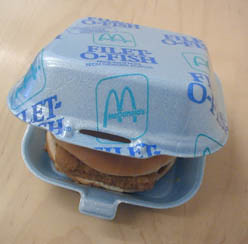 Fighting public opinion can be tough, as McDonalds found out a few years back. Environmentalist groups had been pressuring McDonalds to change from using Styrofoam packaging to paper. They alleged that Styrofoam was contributing to landfill problems because of Styrofoam’s long life.
The President of McDonalds at the time, Ed Rensi, disagreed and hired archaeologists from the University of Arizona to conduct extensive research into the landfills. They concluded Styrofoam had little, or nothing, to do with the impact or contribution of the landfill problem, especially McDonalds packaging.
McDonalds tried to share their findings with the news media, but found it difficult for them to pick it up. It just seemed that it didn’t fit the narrative of what the news media thought was environmentally correct.
After months of trying to change public opinion and the news media, President Ed Rensi angrily realized he just was not going to change public opinion. He ultimately switched McDonalds from Styrofoam packaging to paper packaging.
Continue reading →