Insight Marketing Blog
Digital Marketing Trends to Watch in 2018

As 2018 commences, there are a number of new marketing trends poised to make a significant impact on go-to-market strategy. Here are some of the most important trends to look for in the coming year.
Interactive content
Consumers are constantly looking to make deeper connections with the brands they love. Allowing your audience to interact with your content keeps them engaged and builds a two-way dialogue that will ultimately help you get to know your customers better. You can add interactive polls, quizzes and games into relevant stories online and on social media, hopefully making those stories more engaging in the process.
Chatbots
Ever been on a website and a window in the corner has popped up asking if you need any help? Chatbots are everywhere, from digital assistants to customer support to social media. By 2020, it’s predicted that more than 80% of businesses will have chatbot automation of some sort implemented, so this year you may want to start investigating the best uses for your business.
Mobile video
Total mobile video revenue will rise to $25 billion, with advertising revenue accounting for 2/3 of the total value by 2021, as viewer numbers and usage continues to expand and rise around the world, according to market research from Strategy Analytics. If you’re not using mobile video, this is the year to get started.
Livestreaming
In a bid to better connect with brands, consumers are craving a more personal relationship with real life humans, which is why livestreaming is set to be a big trend in 2018. There are more platforms for livestreaming than ever before. Facebook and YouTube dominate, but Instagram, Tumblr, and Snapchat are up and coming. For companies and brands, livestreaming can be a helpful way to give customer service, make product announcements, conduct Q&A sessions, and more. Live video is more appealing to brand audiences: according to Livestream 80% would rather watch live video than read a blog, and 82% prefer live video from a brand to social posts.
Influencer marketing
Contracting with influencers who have a large social media following has become de rigueur for brands in all categories. Platforms like Instagram and YouTube are the most popular for influencers who like to use videos and live streaming. However, some marketers are getting more bullish on Facebook influencer marketing as recently introduced changes to the News Feed algorithm are expected to considerably diminish the organic reach of brand content. A huge 71% of consumers are more likely to buy based on a social media reference.
UGC
Much like influencer marketing, User Generated Content (UGC) is often more trusted and relevant to consumers than ads and other branded content, which many see as an invasion of their social media space. According to research, 93% of consumers find UGC helpful when making a purchasing decision and smart brands can use it as an influential marketing tool.
Short-lived content
According to Microsoft, the average human attention span is now down to a mere eight seconds. Thus it stands to reason that flashy, short-lived content is becoming more popular. In fact, the Snapchat app was built with this in mind, where ten second videos and photos disappear after a matter of seconds. This trend is continuing on other social media platforms and has become popular with consumers, especially among a younger demographic.
Augmented reality
This trend gives marketers the opportunity to bring the online world into the real world to create deeper connections with their audiences. Augmented reality refers to the integration of virtual experiences with everyday objects and environments. This has been done mainly in gaming apps, but many brands have successfully created apps that work to showcase their products (virtually) in a photo provided by the customer. For example, apps such as WayfairView, includes software that shows how furniture will look in a customer’s home.
Native advertising
Consumers have become more wary of traditional brand advertising. These days, a marketer has to be savvier about promoting a brand through more integrated content that doesn’t appear to be sales-driven. This is where native advertising can be useful, allowing marketers to promote their products or services with content that fits naturally with the media it appears in. In other words, if you removed the brand name, it would match the style of the editorial and design of the publication or website.
Purpose-driven marketing
Consumers are more likely to buy from brands that share the same passions and beliefs as them, so by partnering up with charities and nonprofits that make sense for the brand, businesses can make deeper connections with their audience and create content that really resonates with them.
Simply implementing all the digital marketing innovations discussed above will not automatically guarantee a smooth-sailing 2018 for your brand. The strategy should be to review your company’s business objectives and to align your digital marketing strategies with these goals. This holistic approach to running digital marketing campaigns can help propel your brand forward this year.
Continue reading →How to Choose a Marketing Agency
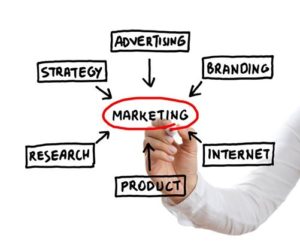
Why is an effective marketing strategy important to the success of your business?
For most businesses, marketing their products or services is the lifeblood of their business so you would think that choosing the right marketing firm would be of utmost importance – and yet many business owners do not appreciate the importance of selecting the right agency or recognize the value effective marketing can have on the success of their business. Indeed, some regard it only as a necessary evil – a bottom line expense – whose value cannot be quantified. Thus they devote very little time or consideration to the selection of this key business partner, which often results in selecting a firm that is unsuitable for their business and its marketing needs. Then, when their marketing does not produce results, they whine that marketing doesn’t work. What follows are a series of important questions that should be answered before selecting a marketing firm that is the right fit for you!
Without customers, you don’t have a business. You have a hobby!
Step 1. What are your goals and objectives?
The first step in selecting a marketing agency is to determine your company’s short- and long-term business objectives. Do you need marketing to generate sales, build awareness, promote a new brand image, increase market share, or a combination of these? Knowing where you want to go is the first step in getting there.
Step 2. What services do you require?
Understanding what marketing services you need will help you choose the right agency for your business. Do you need a strategic marketing plan to be developed? Are you launching a new product and need brand development? Do you require marketing research to ensure there is a viable market for your product or service and the sales message is on point with your target audience? Once the strategic and brand aspects have been addressed, you can turn our attention to the marketing tools and tactics that will be most effective in achieving your marketing objectives.
Below is a list of the major tools and tactics used in most marketing campaigns:
- Advertising: Print, Radio, TV, Billboard And Outdoor
- Content Management: Writing of blog, articles and other content for websites and marketing communications
- Digital Marketing Search Engine Optimization (SEO), Google AdWords, Pay-Per-Click Advertising (PPC)
- Direct Marketing: Database driven snail mail and email marketing campaigns
- Marketing Communications: Brochures, catalogs, product sheets and other printed sales materials
- Public Relations: Writing and distribution of press releases, obtain feature press coverage, articles and white papers; supervise press events and new conferences
- Social Media: Posts to major social media platform (Facebook, LinkedIn, etc.) and appropriate blogs and forums
- Trade Show: Presentations, exhibit design, graphics, giveaways and talent
- Web Development: Websites that are cutting-edge in design, content and functionality
- Video/Photography – Produce video/photography material to incorporate in our digital, broadcast and social media marketing
- POP/Brochure Display – Create Point-Of-Purchase displays, posters and literature to be used in retail location
Step 3. Industry expertise
How important is it that your agency understands and is familiar with your industry? If it is very important, then you’ve substantially narrowed the field or possible agencies.
Generally, an agency that is familiar with your industry, can hit the ground running, requiring less of a industry learning curve and can avoid sometimes costly novice mistakes. Certain industries require an agency with understanding and expertise in the strategies and tactics unique to selling to customers within those industries and differs from industry to industry. For example, marketing a travel destination to consumers, or travel agents, requires a different approach than marketing a flight school to pilots. Agencies who specialize in a particular industry, are more aware of the idiosyncrasies of these specialized markets, and are adept at selecting the right mix of media and messaging to ensure a successful marketing campaign.
The down side to agency specialization is that you may not find an agency locally with the expertise you require. This may require you consider agencies outside your local area, which depending upon the size of your budget and your account management needs, could have cost implications if frequent face-to-face meetings are required due to time considerations and travel expenses.
Step 4. Your target market or region
Where is your target market? Is it local, regional, national or international? Your agency should have the internal staffing, expertise, infrastructure and resources to handle your particular geographic marketing requirements.
Step 6. Agency size
In selecting a marketing agency, bigger is not always better. While it may be somewhat reassuring to have your company’s marketing handled by a large, well-known agency, the reality is that unless your marketing budget is in the six or seven figure range, you may find your account assigned to a series of junior account executives and creative teams more interested in advancing their careers than in promoting your business. Although large agencies have greater resources that you can tap into, carefully consider how important they are to you, as larger agencies, as a rule, charge significantly more for their services than smaller ones. In the end, whether large or small, your account will most likely be managed by a small team of people assigned to work on your account.
Sometimes it’s better to be the big fish in a small pond.
The flip side of the equation is also true. Hiring a consultant or a small firm, in which your company is their “gorilla” account and constitutes more than half their revenue, is also not an ideal situation as they may not have the internal capacity or resources to effectively manage your account. This may lead to poor quality work and missed deadlines. Consider the ramifications if a key agency employee becomes ill for an extended period, or leaves the agency – this could have an adverse effect on your marketing campaign as well as on your business. Therefore, look for agencies that have a number of accounts with budgets comparable to your own and the bandwidth to handle another account of your size.
Continue reading →Facebook Tips for Small Business Marketers
Facebook is a great way to market your small business
Businesses of all types are successfully using Facebook to market their companies. In September 2016, there were 60 million business pages on Facebook, one-third more than a year prior.
Depending on your demographic, Facebook can be a powerful marketing tool. Age 25 to 34, at 22% of users, is the most common age demographic. (Source: comScore) What this means for you: This is the prime target demographic for many businesses’ marketing efforts, and you have the chance to engage these key consumers on Facebook. Here are some important things to keep in mind when defining your Facebook strategy:
Post Consistently. Spend some time working out what frequency you can commit to and dig into your analytics to find out when your audience is most likely to be online – this will maximize your reach. However, don’t let your page “go dark” for any extended period of time.
Include Both Text and Images. Images have stopping power in a way that words never will. Facebook posts that include images tend to get wider distribution than those that are text only. But once someone focuses on your post, you need text to keep them engaged and tell them what you want them to do next.
Be Yourself. Facebook is a personal medium. Treat it that way. Ask questions, post responses, express preferences. Give fans a peek into your operation. Introduce your staff. And always make your posts conversational.
Vary Your Posts. Social media is all about engaging the end user–and nothing disengages people more than selling all the time. That’s not to say that you can never sell, you just need to earn the right by posting other non-sales content.
- Customer photos almost always drive tremendous engagement.
- How-to tips establish your company’s expertise, and give fans a reason to keep coming back to your page.
- Videos, always powerful, are especially attention-getting on Facebook since they auto-play. Facebook’s algorithm favors native video – not outside links to places like YouTube or Vimeo – allowing for a better opportunity for more people to see your content.
- Product photos are especially appealing when you create a lifestyle image. Still product shots on white backgrounds are great for your eCommerce store, but can be boring on Facebook. Style your products on a background that conveys the lifestyle of the target demographic. Model shots are also engaging and they don’t need to be professionally done.
- Contests can create engagement and generate lots of new fans.
Increase Visibility of Important Posts. This is a simple tip, but many people aren’t aware that posts can be “pinned” to the top of a Facebook Timeline. It’s frustrating when a post describing an important announcement or special offer disappears down your page.
Use Facebook Ads. I cannot express how important it is to consider using Facebook ads or boosts to increase the reach of your content. Without ads, Facebook has said that organic content (on average) will be shown to 6% or less of your fan base.
Messenger for Business. Just recently, Facebook officially launched Messenger for Business to let users chat directly with the companies. This is a great tool to have a personal, real-time conversation with customers. Many companies are using this to replace email as a customer service tool, including real-time order confirmations and shipping notices.
Of course, the overarching objective of Facebook is to stimulate engagement and produce valuable and exciting content. Therefore, tailor your post content to your audience, be personal and conversational, and use fresh and simple wording. Executing these optimization tips will improve your Facebook Business Page visibility and user experience, both of which are crucial for your success.
See Valerie Gosset’s marketing ideas for the Garden Industry at Evergreen Marketing
Continue reading →